
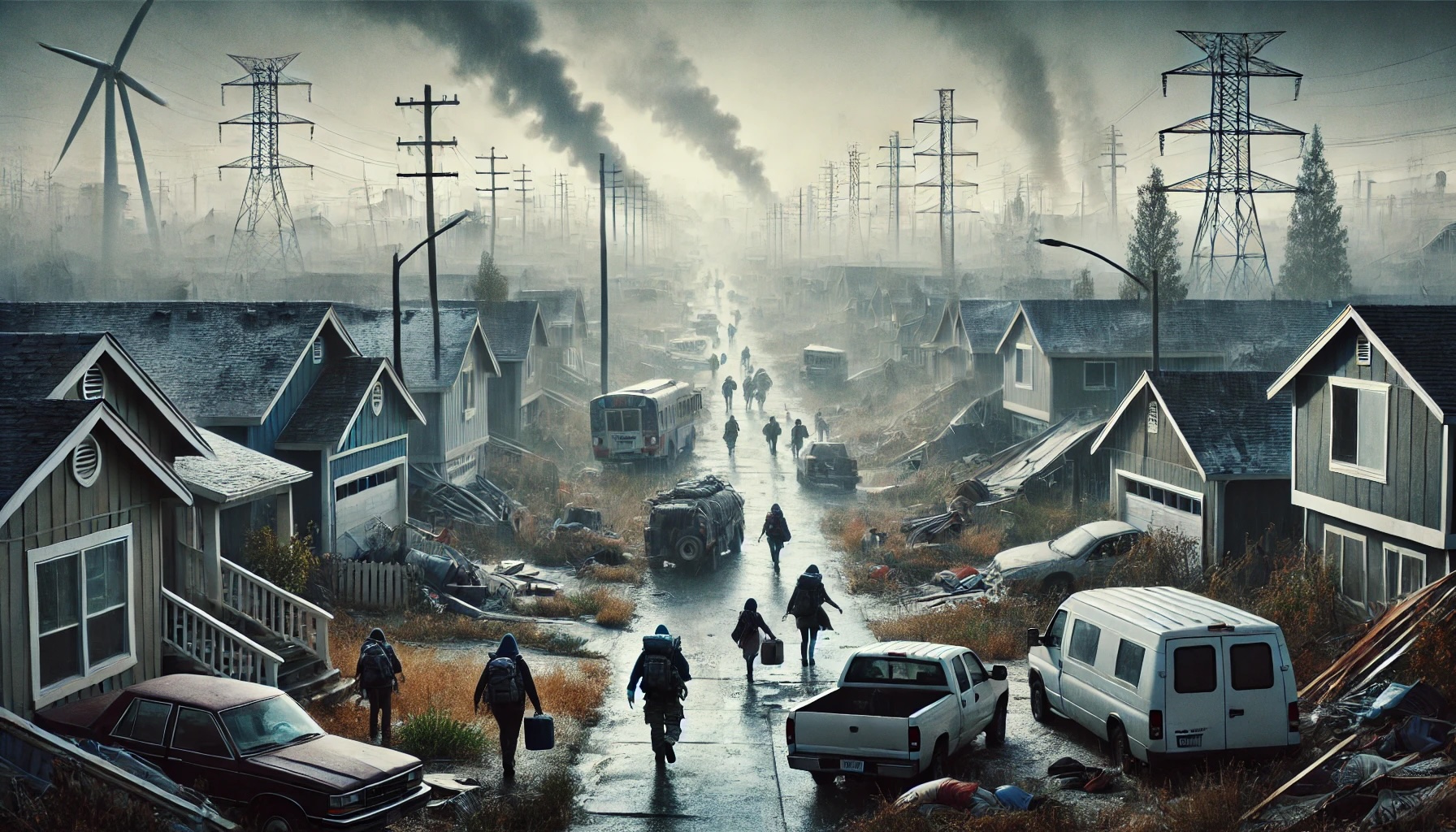
Climate change-induced disasters are growing in frequency and intensity. One particular, slow-moving disaster unfolding before our eyes—the unraveling property insurance markets in California and Florida — threatens the American dream and the U.S. economy. As climate-fueled droughts, wildfires, flooding, and hurricanes become more severe, these two states are a warning for the coming national crisis in homeowners’ insurance, or as Dave Roberts calls it, a growing clusterfuck.
The Crisis in Florida and California
In Florida, the increasing strength and frequency of hurricanes, fueled by warming waters and shifting climate patterns, have left the state grappling with escalating insurance costs. Insurers are retreating from the Florida market as the risks—and potential losses—become untenable. In 2022 alone, the state experienced $100-200 billion in losses, including $60 billion in insured losses due to hurricanes, leaving insurers under unprecedented financial strain. Premiums for those who can still get coverage are skyrocketing, with homeowners paying $10,992/year in 2023, four times the national average.
And that is assuming they can even get insurance. Many Floridians are left relying on the state-backed Citizens Property Insurance Corporation, which is facing its own financial vulnerabilities. The damage totals for Helene and Milton are still being calculated, but 38,000 claims have already been denied and hundreds of thousands of homeowners are struggling to get compensation. If the state insurance company wasn’t guaranteed a taxpayer bailout, it would have already been driven into bankruptcy.
Meanwhile, California faces a mounting crisis as wildfires are causing insurers to abandon the state and rates to spiral. Driven by prolonged droughts and higher than average temperatures, wildfires have become nearly year-round events. By mid-2023, several major insurance providers announced they would no longer write new policies in the state, citing billions of dollars in wildfire claims as unsustainable. Homeowners, even those in urban areas, are struggling to find affordable options, with many turning to last-resort state programs that come with limited coverage and high costs.
Foreshadowing a National Trend
Don’t blame the insurance industry. Risk analysis has traditionally used historical data to predict and price risk, but the rapid acceleration of climate change has rendered these models obsolete. Without the ability to price policies accurately, insurers are force to reduce coverage and withdraw from “high-risk” areas altogether.
What’s unfolding in Florida and California is the tip of the iceberg. No one is invulnerable to extreme weather events as 1,000- and 10,000-year storms become the norm and heat waves and droughts strike previous “climate havens,” — even as Americans are migrating southwards into areas considered the most vulnerable. Meanwhile, the Midwest is grappling with increased flooding risk, while coastal cities and mountain communities in the Northeast face rising sea levels and storm surges. High risk is the new normal.
Mortgages, Equity, and Homeownership
The absence of affordable homeowners’ insurance poses a significant threat to the housing market and by extension the American dream of homeownership. Mortgage lenders require proof of insurance to protect against potential losses. Without available or affordable insurance, homeowners can struggle to meet these requirements, which places their mortgages—and homes—in jeopardy. Lenders may refuse to finance properties in “high-risk” areas, further driving down home values in affected regions.
As a result, property values are beginning to decline in some areas. Florida’s market should serve as a wake-up call. Homeowners can no longer afford spiraling insurance and HOA costs, homebuyers are wary of buying, and many current homeowners find themselves unable to sell their properties without taking a substantial loss. Homeownership has been a cornerstone of financial security and wealth-building. Excluding the top one percent of earners, home equity currently accounts for up to sixty-five percent of total household wealth. The climate insurance crisis is steadily chipping away at this foundation and Florida’s population of fix-income retirees are among the most vulnerable.
As insurance becomes too expensive or altogether unavailable, the impact on the housing market will reshape the economic landscape. Large sections of the country face decreased homeownership rates as fewer people can afford to buy or maintain properties. The unfolding crisis in Florida and California is a stark reminder that climate change isn’t just an environmental issue—it’s an existential threat to the American Dream of home ownership… and the U.S. Economy.
It gets worse
As Wharton Econonist Benjamin Keys points out, another cost facing homeowners in a warming world is higher property taxes. States, cities, counties and towns will have to pay for both resiliency and recovery efforts. Even without the inevitable climate disaster, communities that want to protect themselves against future disaster risks must fund large infrastructure investments, like sea walls and improved storm water drainage.
Historically, buying a house with cash or a fixed-rate mortgage was thought to broadly lock in housing expenses. Climate change has destroyed that assumption with disastrous consequences for retirees on a fixed income and home buyers looking for predictability.
Here is a documentary about how this is playing out right now in Florida:
What Can Be Done?
Unfortunately, in the immediate short term, there is not much that homeowners in the at-risk states can do. Moving to a less risky, more insurable part of the country only transfers the problem to unwary new home buyers. This will ultimately drive housing prices lower without solving the underlying problem.
The real first step is for the insurance industry to reexamine their risk assessment models, accounting for the increased likelihood of costly, climate-related events. This will impact insurance costs dramatically but accurate risk assessment should provide the predictability needed for long term investments. Faced with the measurable potential for climate-related damage, the construction and building renovation arenas will be incentivized to build more climate-resilient structures. The same incentives would apply to infrastructure providers and land use decisions by government officials while preventing the rest of us from having to subsidize those who chose to ignore climate realities.
In the end, realistic risk assessments and pricing models help focus public awareness of the threat facing everyone. Eventually (hopefully sooner than later), public policy will address the REAL problem of climate change, bending the curve and make the planet livable.