
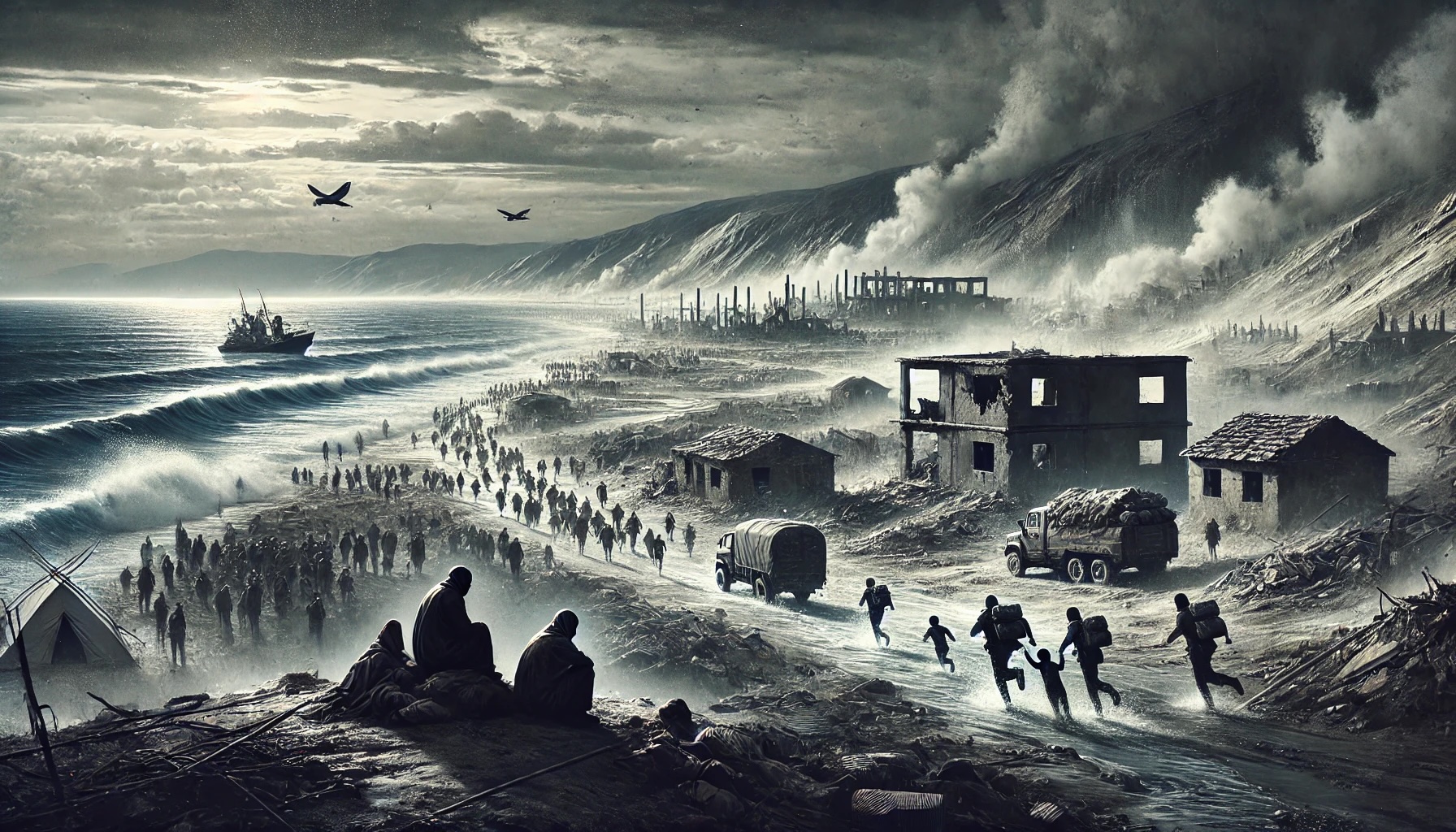
Over the past decade, the world has witnessed the growing specter of climate-induced migration, with nearly 20 million climate refugees reaching Europe and the United States. This mass displacement, fueled by environmental collapse and its cascading effects of drought, destruction, and civil war, has strained the social fabric, intensified political polarization, and driven a sharp resurgence in nationalist and far-right ideologies.
A World on the Brink
The Syrian Civil War offers a stark preview of how environmental collapse can destabilize entire regions and turn millions of prosperous people into refugees. A devastating drought from 2006 to 2010 wiped out crops and livestock in Syria, forcing 1.5 million rural Syrians into poverty and into cities. This collided with long-standing political grievances, sparking a civil war that has displaced over 13 million people and contributed to wave of migration into Europe.
Similar dynamics are playing out in Central America and Mexico, where droughts and erratic rainfall patterns have devastated agriculture, forcing families to flee to the U.S. These climate migrants, driven by the inability to feed their families, become victims of crime along the way and hostile policies and scapegoating as wealthier nations refuse to accommodate their arrival.
In Europe, the arrival of millions of refugees from Syria, Afghanistan, and Africa has stoked nationalist backlashes. Countries like Hungary and Italy have implemented harsh anti-immigration policies, while far-right parties have gained prominence, leveraging fears of cultural erosion and economic strain. The United States has mirrored this trend, with increasingly restrictive border policies and the weaponization of migration as a political wedge issue.
500 Million Climate Refugees
The next ten years promise to exacerbate these dynamics. Projections estimate that up to 500 million people will be displaced by climate-related disasters—extreme droughts, floods, and resource scarcity. Most will originate from regions where their ecosystem is already strained near the tipping point: Sub-Saharan Africa, South Asia, and Central America. These regions lack the environmental and economic resiliency to withstand worsening conditions. Climate change is a chaos multiplier, destabilizing governments, accelerating conflicts, and creating a domino effect that will inevitably send waves of refugees toward wealthier nations.
This influx will not be gradual. Climate disasters such as hurricanes, wildfires, and crop failures often occur abruptly, forcing entire communities to migrate simultaneously. 2024’s string of weather driven disasters has made it clear that there are no climate safe havens. As resource-rich countries scramble to secure their borders even as they deal with the own disasters, the strain on global governance will escalate, leading to consequences we cannot yet envision.
The Political Fallout: Nationalism and Fascism Resurgent
The arrival of 20 million refugees has already shifted political landscapes in the U.S. and Europe. What happens when that number reaches 100 million—or 500 million?
Far-right parties funded by the Petroleum Industrial Complex, already emboldened by the current crisis, will continue to expand their influence by exploiting public fears of economic displacement and cultural change. Policies aimed at curbing immigration will become more draconian, leading to widespread human misery and the militarization of borders. In the U.S., the debate over climate refugees will further polarize an already fractured society, fueling xenophobic rhetoric and justifying authoritarian measures under the guise of national security.
In Europe, fractures within the European Union will deepen as member states prioritize tribal and national interests over solutions. Countries on the frontlines of migration, such as Greece and Italy, may feel abandoned, while wealthier nations close their borders. This will shred whatever vestiges of political cohesion the EU enjoys and undermine its ability to respond to future crises.
The Human Cost
While political elites weaponize the crisis for their gain, the human toll on refugees will be staggering. Refugee camps—already overcrowded, underfunded, and rife with human suffering—will become the default response for millions. Basic resources like food, water, and medical care will be stretched beyond breaking points. Vulnerable populations, particularly women and children, will bear the brunt of exploitation, trafficking, and violence.
Communities in receiving countries will also feel the strain. Public services like healthcare, housing, and education will face increased pressure, potentially sparking resentment among local populations. This feedback loop of competition and blame will amplify social divisions, leaving communities more fragmented than ever.
A Global Catastrophe
The response to climate migration over the next decade will define the course of the 21st century. To avoid catastrophic outcomes, world leaders must abandon short-sighted, isolationist policies in favor of collaborative, long-term solutions. This means investing in climate resilience in vulnerable regions, establishing robust legal frameworks for climate refugees, and addressing the root causes of migration.
If we fail, the crises of today will pale in comparison to what lies ahead. The rise of nationalism, the erosion of democratic values, and the human suffering wrought by climate displacement are not abstract threats—they are unfolding now. The choice before us is stark: adapt and cooperate, or allow fear and division to dictate our future.